
Beyond Spare: Dressing the Guest Room with Intention
Less a room in waiting than an embrace designed, the guest room is an emblem of empathy. Through linen, layer, and gesture, we explore how intention transforms transience into a soft place to land.
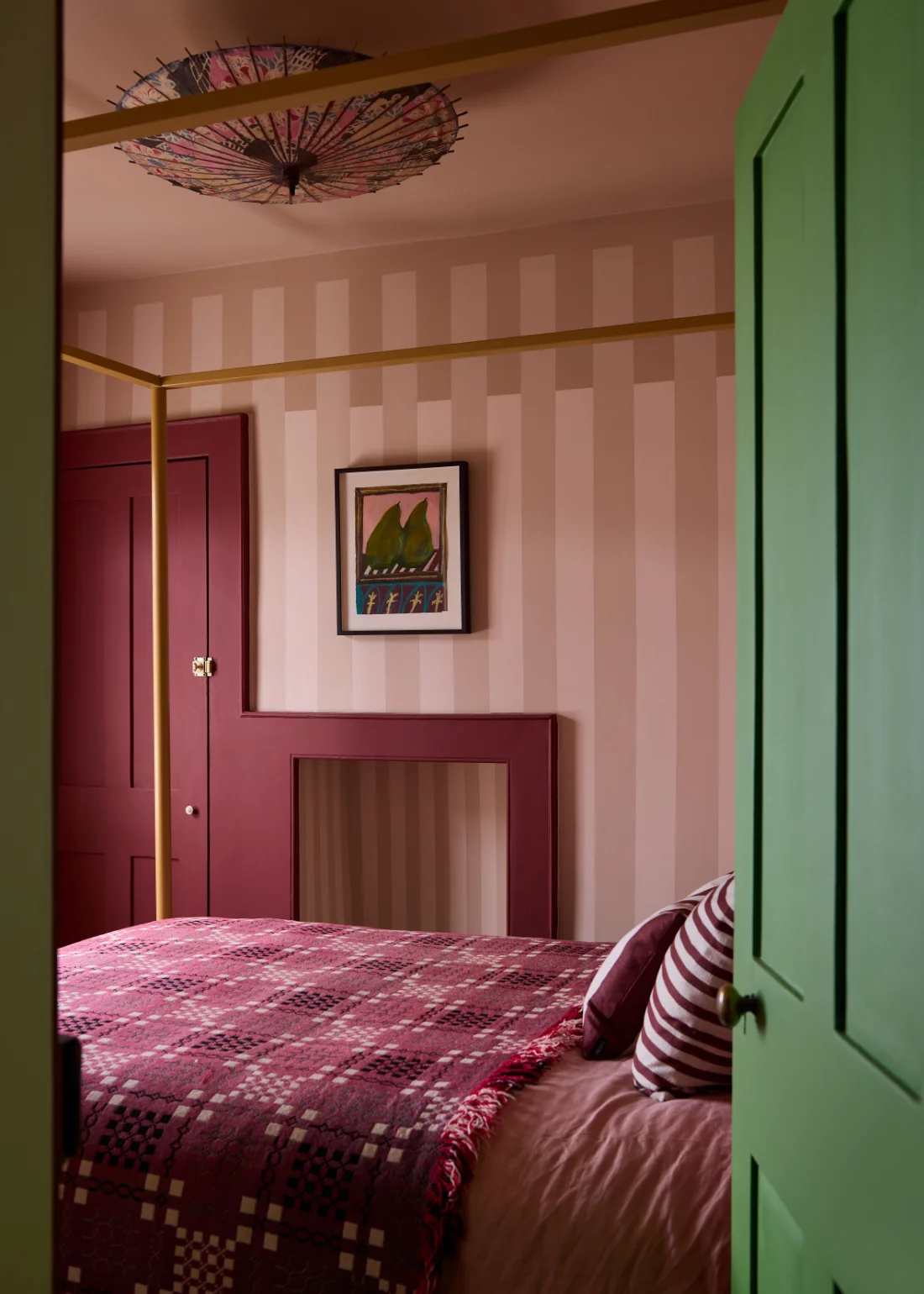
Farrow & Ball colour-blocking on the walls, anchored by woven patterning, gives the guest room a composed, considered scheme. Photography by Boz Gagovski. Designed by Russell Loughlan with Farrow & Ball
The guest room has always lived in the margins, just beyond the daily script, waiting in anticipation. A chamber of arrivals and departures, of fleeting presences that leave behind lingering impressions.
Too often it is the exile of retired furniture,and a bed dressed in whatever sheets survived the springtime linen cupboard cull. But approached with intention, it becomes something far greater: one of the most eloquent expressions in the home, at once threshold and sanctuary.
It’s the room that waits to hold us when we need it most. Which is precisely why it never really is spare at all.

At our Little Kimble House listing, William Morris wallpaper mirrors the garden’s foliaged landscape and the symmetry of the impeccable bay
Once, the guest room was an emblem of civility. In Georgian London, it was staged with the same orchestration as the drawing room: embroidered coverlets layered with precision, a writing desk angled toward the light, cabinetry gleaming as proof of refinement. In country houses, whole wings unfurled for visitors, each room tuned to persona – a choreography of welcome played out in fabric, furniture, and proportion. To be invited to stay was to be folded, however briefly, into the social standing of a household. Hospitality, yes, but with hierarchy in tow.
Even amid such grandeur, the chamber held another charge: a retreat within the recess. As design writer Sarah Archer reminds us, the spare room as we know it – a tantalising, enviable feature of domestic life – is a surprisingly modern phenomenon. Born of the postwar housing boom, when a modest surplus of square footage allowed families to keep a bed permanently made, it marked the moment the guest chamber slipped from gilded formality into suburban ease.
No longer about ornament, its luxury became restraint: a room deliberately unclaimed, untouched by daily routine, its very emptiness recast as generosity.
That emptiness is, in a sense, its eloquence. A guest room is always a kind of fiction – a bed rarely slept in, a space suspended until its moment arrives. Its meaning lies in intention: whether a suite with a bathroom or a narrow alcove for slumbering nights, what matters is the sense of readiness.
A lamp angled for warmth rather than illumination, a chair turned toward the garden’s weeping willow – small gestures that tell the guest the room has been waiting for them all along.
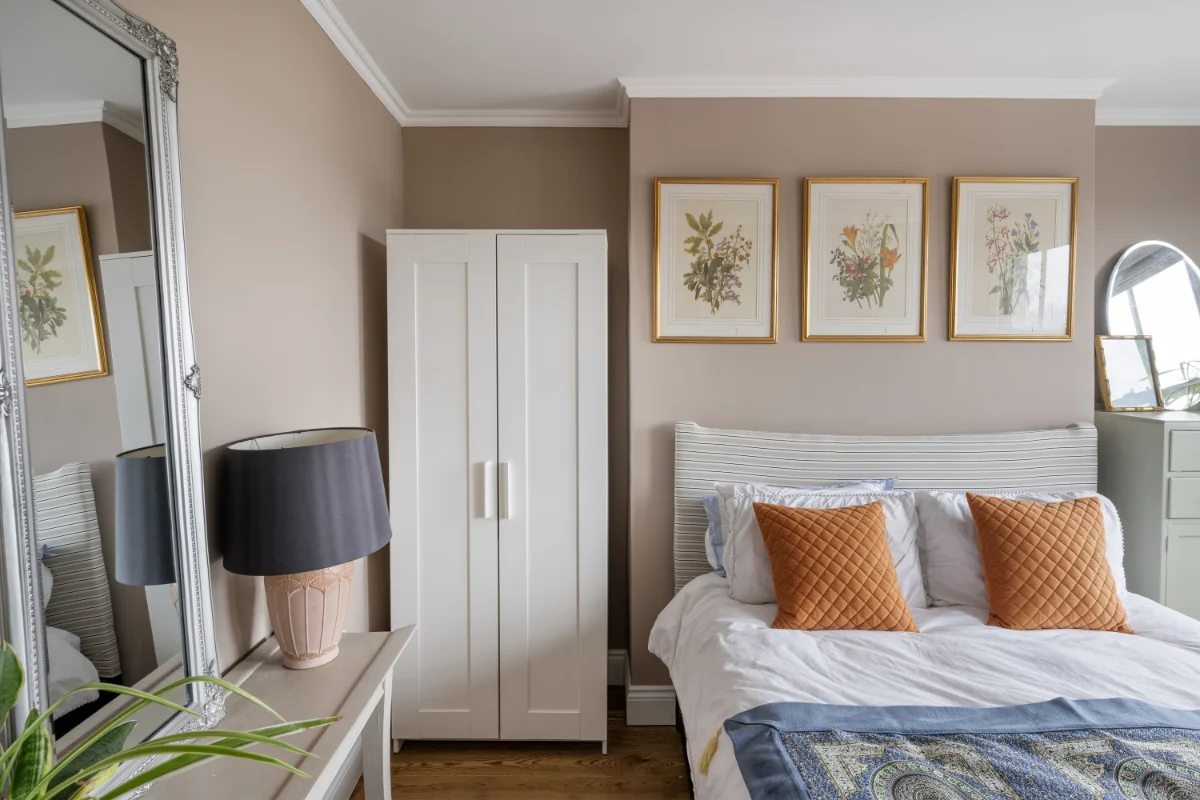
Botanical prints and tangerine accents bring balance and warmth to a pared-back scheme in our Lavender Hill listing
In our own moment, this readiness carries a new weight. Covid made distance sharp and proximity precious, and the guest room shifted from convenience to lifeline. It became the place where visits stretched into weeks, where reunions were savoured slowly, where the simple fact of presence felt like privilege. Within these walls, joy was celebrated and grief absorbed; conversations deepened, and silences found their own form of solace. It was where love arrived weary from travel and was allowed to rest, where yearning gave way to the profound relief of being near.
To have a room prepared was an act of devotion, a promise of intimacy in its truest sense.
To dress a guest room with intention is to write a story of welcome – and in doing so, design becomes your most fluent expression of empathy.

Artwork, colour, and layered fabrics dress the guest room with curatorial intent and divets of deliberate dialogue
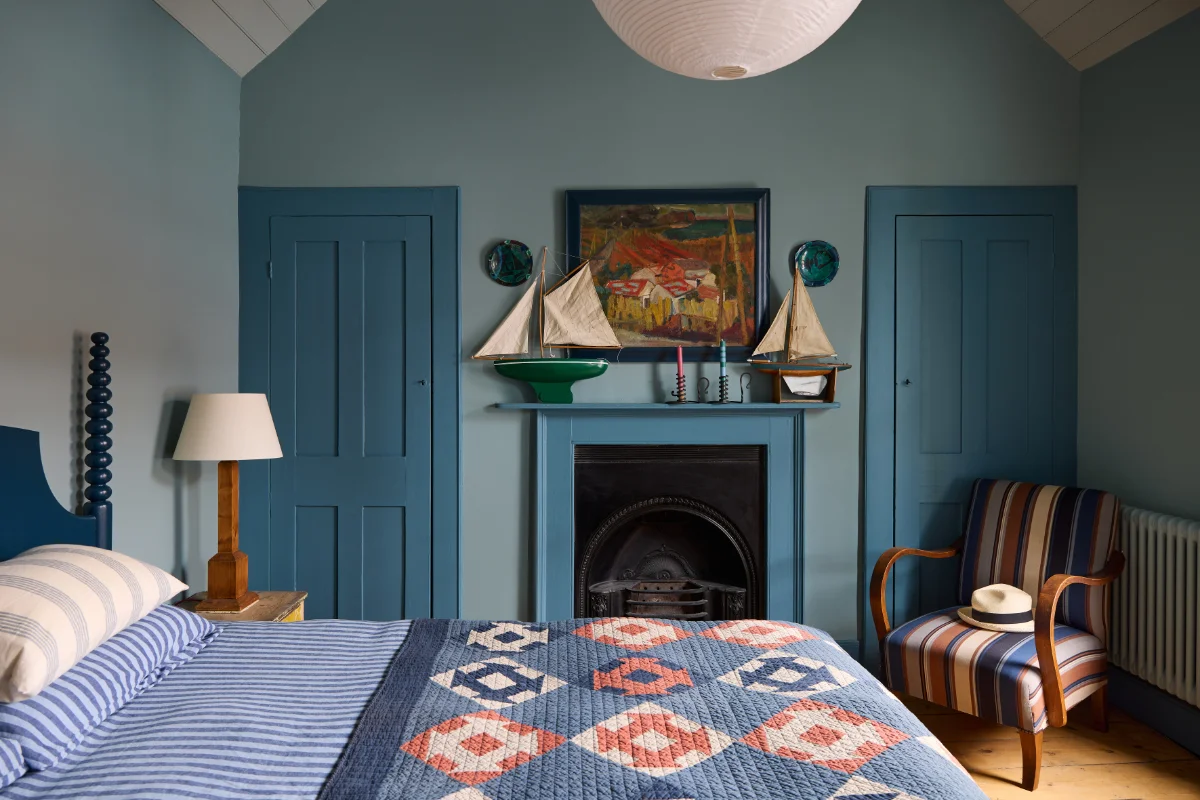
The mantelpiece becomes a staged vingette, with sailboats, candlesticks, and semantics of blue. Photography by Boz Gagovski. Designed by Russell Loughlan with Farrow & Ball
It need not be opulent – what matters is how the room composes itself: the drag of velvet against linen, the reassuring weight of a quilt, the calculated balance of decor and surface, the way first light softens across the floorboards. A guest room, when successful, feels intentional rather than improvised – its atmosphere rehearsed, its emotions anticipated, its gestures tuned to care.
In Emma Ainscough’s Charlotte’s Folly design, a scalloped alcove, painted in cornflower blue, wraps headboard, window surround, and patterned walls, so the eye reads the room as whole rather than fragment. Fabric is deployed with equal intent: heavy curtains deepen the cocoon, while a quilted white coverlet and indigo velvet cushions layer texture without breaking the discipline of the palette. Repetition of shade and surface becomes the architecture here – proof of how colour, handled with precision, can transform compression into composure.
Elsewhere, softness becomes the measure. Designer Zenia Olivares describes her layered guest room as “a quiet embrace when you walk in.” Stripes and florals mingle with a quilt folded just so, while blue-and-white ceramics and a rose painting catching the morning light lend a sense of ritual. She wanted it to feel “bright, welcoming, a little bit elegant, a lot bit cozy” – and that duality shows in the room’s composition: the Clary Sage ceiling shifting from green to blue with the changing light, the way patterns overlap without ever crowding. It is a room that unfolds: timeless yet personal, cheerful yet composed.
What endures is its longevity. In a space meant for temporary presence, Olivares has created a room that feels rooted – fabrics and colours seeming to settle into the very walls. That permanence is poignant: a reminder that even the briefest stays deserve the weight of intention, and the sympathy of care.
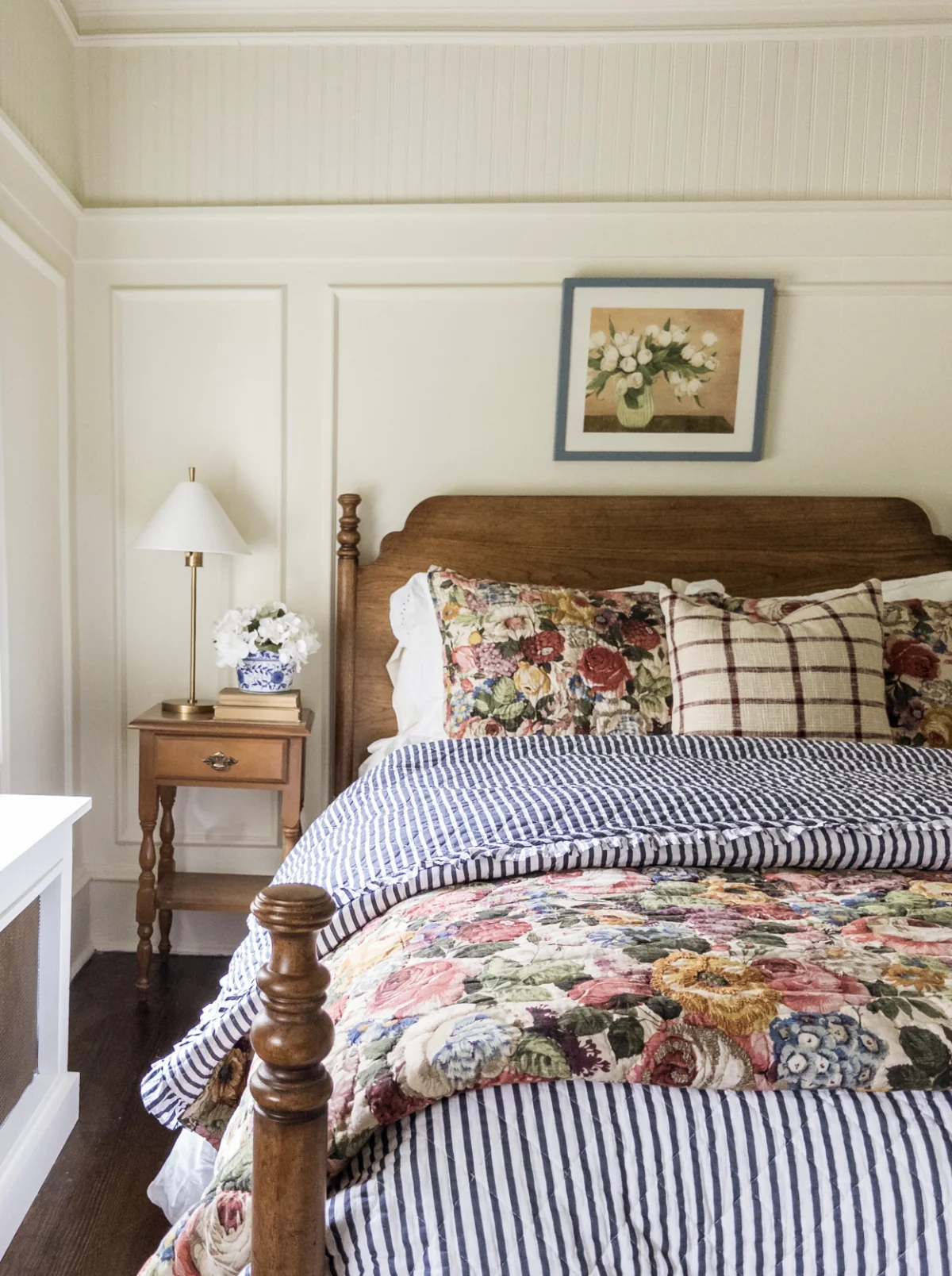
“A quiet embrace when you walk in…” Photography and Design by Zenia Olivares
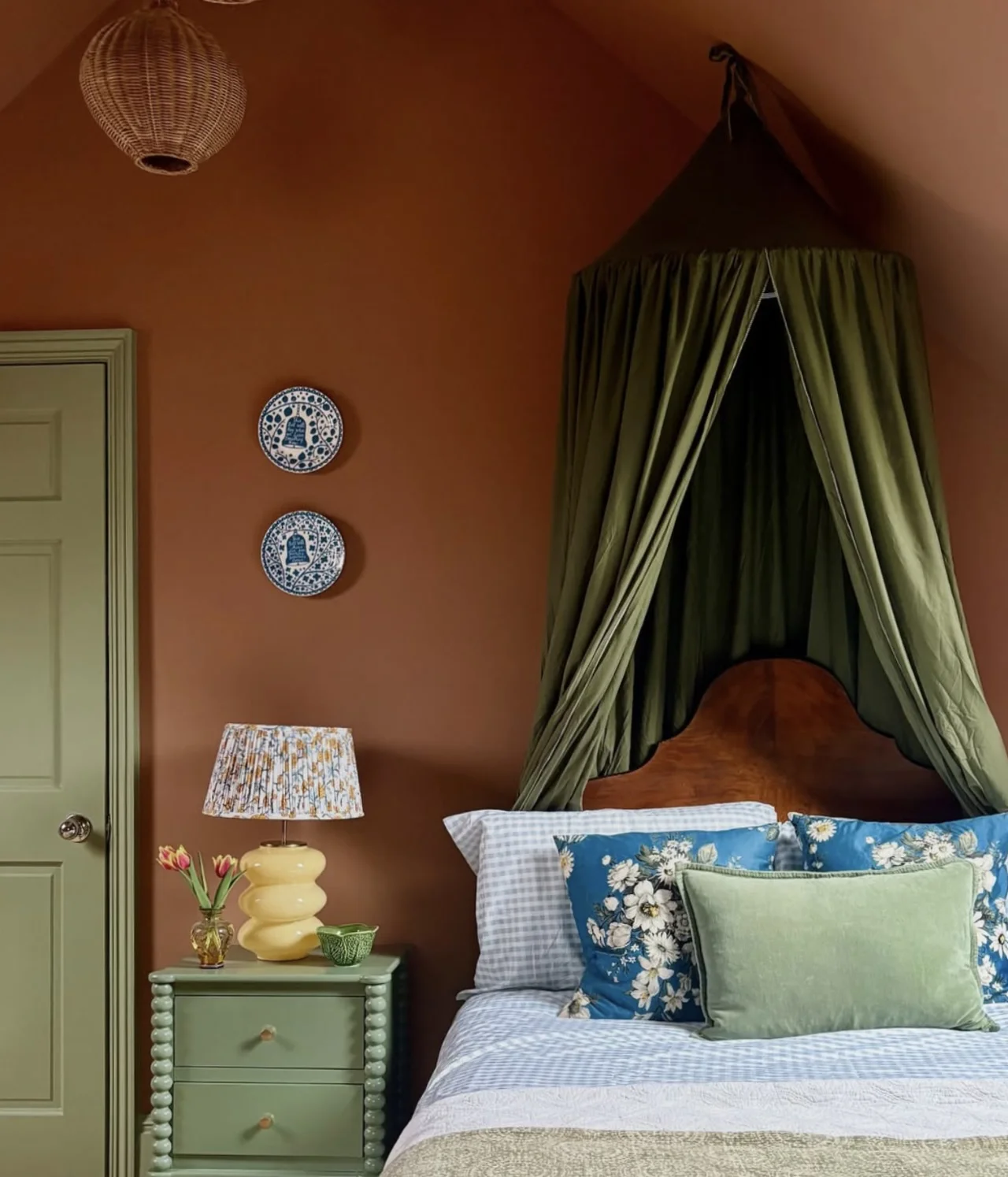
Modern traditionalism dressed in grounded tones, lifted by the playful silhouette of a citrus-coloured lamp. Photography and Design by Francesca Rowan-Plowden
In another register, designer Francesca Rowan-Plowden turns to terracotta and olive for warmth and gravity. A canopy of heavy drapery falls from the ceiling, framing the bed with theatricality tempered by proportion. Her chamber nods to the history of the guest room as a stage for civility yet translates it into cozy comfort. Textiles soften what might otherwise feel ceremonial, turning grandeur into welcome.
What unites these rooms is intention: materials that invite choice, colours that steady, objects chosen rather than handed down. A guest room is not a replica of the host’s own bedroom, nor is it neutral ground. It is the room that shows how we wish to be known – or, perhaps, how we wish to love. A space composed not for daily life but for the arrivals and pauses that give it shape.

Minimalism holds intention and empathy in our Ursula Street guest room: textiles for choice, canvases for inspiration, and am F&M basket with cushions in abundance. For sale now
The guest room is less about being “spare” than about being prepared. Prepared for the expected visitor, the long-awaited friend, the crossing of lives that lasts only a night. And prepared, too, for what cannot be planned: illness, grief, recovery – the moments when a room must hold still while the rest of the house moves on.
Which is why the best guest rooms are never just rooms at all. They are sanctuary disguised as courtesy, an intentional embrace extended in advance – a hug that always outlasts the host’s goodnight.
And tightens, close, long after the house is asleep.
Curious what your home could be worth in today’s market? Request a valuation here.